
I was devastated to learn that my friend and former colleague Saleemul Huq died at his home in Bangladesh on 28 October. Few individuals have had a greater impact on humanity’s response to the climate emergency than him. It was an honour to know and work with such a man.
Without Saleem, the world would be hotter today than it is. Communities the world over would be less prepared to face what is coming. And we would have less hope of ever reigning in the climate monster. He was an inspirational and visionary leader, a master strategist, and a mentor to hundreds of people. His death has sent shockwaves through the vast community of people working on climate change.
I first encountered Saleem when I was working as a journalist and needed a comment on a story on climate change. Soon, and for eight years, I was working alongside him at the International Institute for Environment and Development, where he led the climate change group and I was the organization’s press officer.
Saleem was a dream to work with as he never turned down a chance to talk to journalists about climate change. He would be ready at 4:00 am for an interview with a reporter on the other side of the world. He would say “yes” to a media request whether it came from a major broadcaster or a tiny newspaper. I introduced him to hundreds of journalists and he gave his time and knowledge to them all. Saleem was on a mission and he knew that each second counted. He took every opportunity to push the world towards a sustainable future.
Other colleagues and friends have written about Saleem’s immense impacts on climate change policy. He also did more than nearly anyone to inform and educate journalists and, through them, raise awareness of climate change among hundreds of millions of people worldwide. Some of the journalists who knew Saleem well and who have written obituaries include Joydeep Gupta, Jayanta Basu and Seth Borenstein.
Saleem’s passing is hard to take in. I will remember him for his softly-spoken words and the glint in his eye, his warmth, good humour, generosity and tireless commitment to justice.
The outpouring of love for him on social media this week has been a powerful reminder of how many lives Saleem touched and how many careers he shaped. This is perhaps his greatest legacy, the small army of Saleem-inspired researchers, activists, negotiators, policymakers, journalists and others in every corner of the world who have committed their lives to addressing the climate and ecological emergencies. I’m sure his passing will inspire many to redouble their efforts.
Goodbye Saleem. The work goes on. We will never forget you.
Photo credit: IISD/ENB


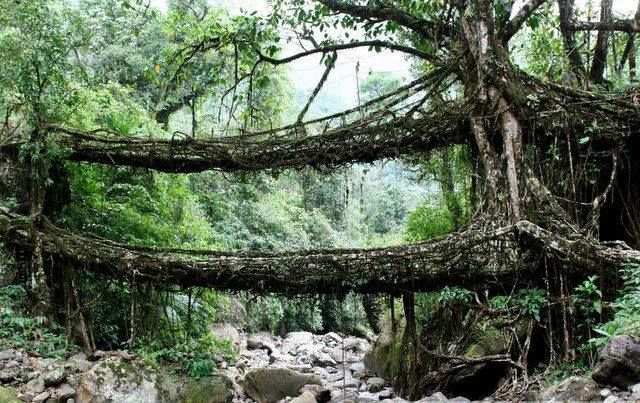


![By AditiVerma2193 (Own work) [CC BY-SA 4.0 (http://creativecommons.org/licenses/by-sa/4.0)], via Wikimedia Commons](https://underthebanyan.blog/wp-content/uploads/2016/10/living_root_bridge.jpg)
 Under The Banyan